




When people are in pursuit of budget friendly ways to get a loan, their eyes usually lock onto a standalone metric, the interest rate. Even though a low headline rate is important, it is only one part of the equation. True economic affordability and accessibility has many layers that have to be taken into account such as hidden costs, structural soundness and sustainability, the length of the tenure, and how the financing product aligns with your actual cash flow. As a matter of fact, a loan that looks cheap on the surface can actually become a heavy burden if tight terms or unexpected penalty clauses are thrown at you during the middle of the tenure.
In this blog, Indel Money, the most well known, recognized and reputable loan company in India gives a deep insight into what makes a loan truly accessible and affordable.
Loan affordability is about minimizing the actual cost of liability based financing while avoiding mental strain and protecting your peace of mind. Widely recognized non-banking financial companies (NBFCs) like Indel Money have completely transformed and redefined the debt capital ecosystem by coming up with capital products that evaluate loan performance from origination to maturity, therefore, making sure that borrowing lays the foundation and opens doors for better prospects, instead of becoming a financial quagmire.
In order to analyze if a loan company in India or credit facility is truly easy on the pocket you must comprehensively evaluate the basic marketing figures of the past. True economic affordability is structured on the foundation of four core pillars:
Transparent Pricing: Zero undisclosed service charges, administrative costs or hidden clauses.
Customized Tenures: Aligning the repayment schedule to your monthly revenue cycle,instead of mandating a “one-size fits-all” timeline.
Collateral Optimization: Exalting the loan-to-value ratio (LTV) allows you to access the right amount of funds from existing assets and holdings without excessive borrowing.
Frictionless Prepayment: Allowing borrowers to satisfy their monetary obligations and retire their debts before the completion of the loan tenure without facing punitive assessments.
When these components come together borrowers can successfully avert the chain reaction of supplemental expenses that usually amplify financial liabilities
In the vast and extensive domain of Non-Banking-Financial-Companies (NBFCs) and loan companies in India, Indel Money stands apart and shines above the rest. The company has distinguished itself by curating its signature services around these fundamental pillars of holistic financial access. Instead of coercing and compelling customers with run-of-the-mill financing packages, the institution prioritizes focusing on collateral based borrowing, predominantly gold loans, which intrinsically minimize risk and significantly de-escalate debt services expenses when compared to conventional unsecured personal loans in India.
By providing customers with competitive, market-leading interest rates, Indel Money makes sure that a sizable chunk of your periodic cash flows is directly channeled into the process of principal repayment, rather than just servicing the accumulating interest. Moreover, our unwavering commitment to transparent compliance reporting and unambiguous disclosures mean that customers will not be subjected to unexpected bureaucratic surprises at the eleventh hour.
A value-optimized and budget-friendly loan must be able blend in with the unpredictable twists of life. If an unprecedented event shuts down your monthly cash flow, a rigid and uncompromising repayment schedule can put you in a difficult position. Indel Money counters this vulnerability by effectively engineering high levels of flexibility into its execution architecture. Borrowers are positioned to harness diverse repayment structures, encompassing from predictable periodic installments to interest-only servicing to precision-engineered bullet payment structures adapted to specialized cash flow generation.
In addition to this, the access to debt-based financing is devoid of exorbitant foreclosure fees, so, if the customer’s financial standing witnesses growth, maybe via an unforeseen liquidity event or by generating high revenue in a business. They can settle their credit line completely free from exposure to aggressive penalty structures. The availability of frictionless financing extensions further elevate the borrower experience, stonewalling financial stress during phases of rigid economic downturns
At the end of the day, true loan affordability is a seamless convergence of structural overhead requirements, complete operational transparency and reconfigurable repayment structures.
Through the carefully calibrated and synchronized integration with everyday commercial conditions and ground level execution factors. Indel Money validates the fact that harnessing a personal loan in India via borrowing does not have to jeopardize the monetary stability of the borrower. True financial affordability provides you with the capital leverage, while protecting tomorrow’s economic well being.

Micro, Small and Medium enterprises are essentially the core lifeline of the modern economic landscape. As these businesses expand operations and broaden their organizational footprint. New capital infusions are periodically required. Securing and leveraging capital from seasoned institutional investors or specialized Non-Banking Financial Companies (NBFCs) comprises a comprehensive evaluation of multiple operational and financial performance markers. Lenders usually assess certain risk factors and potential liabilities to calculate creditworthiness. When MSME businesses approach widely recognized financial institutions like Indel Money, specific criterias are examined to make sure capital is put to use effectively and efficiently.
In this, Indel Money, one of the most popular Non-Banking Financial Companies (NBFC) in India, gives a deep insight into what lenders are looking for before offering an MSME loan in India to growing micro, small and medium sized businesses
The central priority during any credit evaluation is given to the financial statements and capital moving reports of any business organization. Regular streams of revenue, return on sales, and past balance sheets are rigorously examined by professional credit analysts. For attaining an MSME loan in India, lenders require proof that the business makes enough money to fuel their operating costs while seamlessly taking care of outstanding debts and liabilities. For growing micro, small and medium sized businesses it is important to maintain meticulously audited and verified financial records and statements, because the transparency of these documents minimize the perceived risk of failure and fastrack loan approvals.
Historical credit utilization of both the company and its promoters will be subjected to intense scrutiny. Credit bureaus will be put on the job to analyze credit scores, current debts, and prior covenant breaches. A flawless credit history indicates strong credibility and robust financial discipline. Lenders and financial institutions usually prefer businesses that showcase a well balanced debt-to-equity ratio. When transparent credit monitoring and debt surveillance is put in place, financial institutions will feel a lost less apprehensive and more secure in offering high credit limits to foster future expansion goals
Beyond the balance sheet, the commercial viability and the scalability of the business model will be analyzed comprehensively. Credit examiners evaluate the core strength of the business, the customers they are catering too, and popular industry trends. Businesses that operate in recession resistant markets with a clear line of sight on growth and strategic growth trajectories are viewed through a positive lens. Lenders want to certain that the funding provided will be employed for growth and productivity purposes only such as material sourcing and acquisition, upgrading infrastructure or operating cash flow expansion.
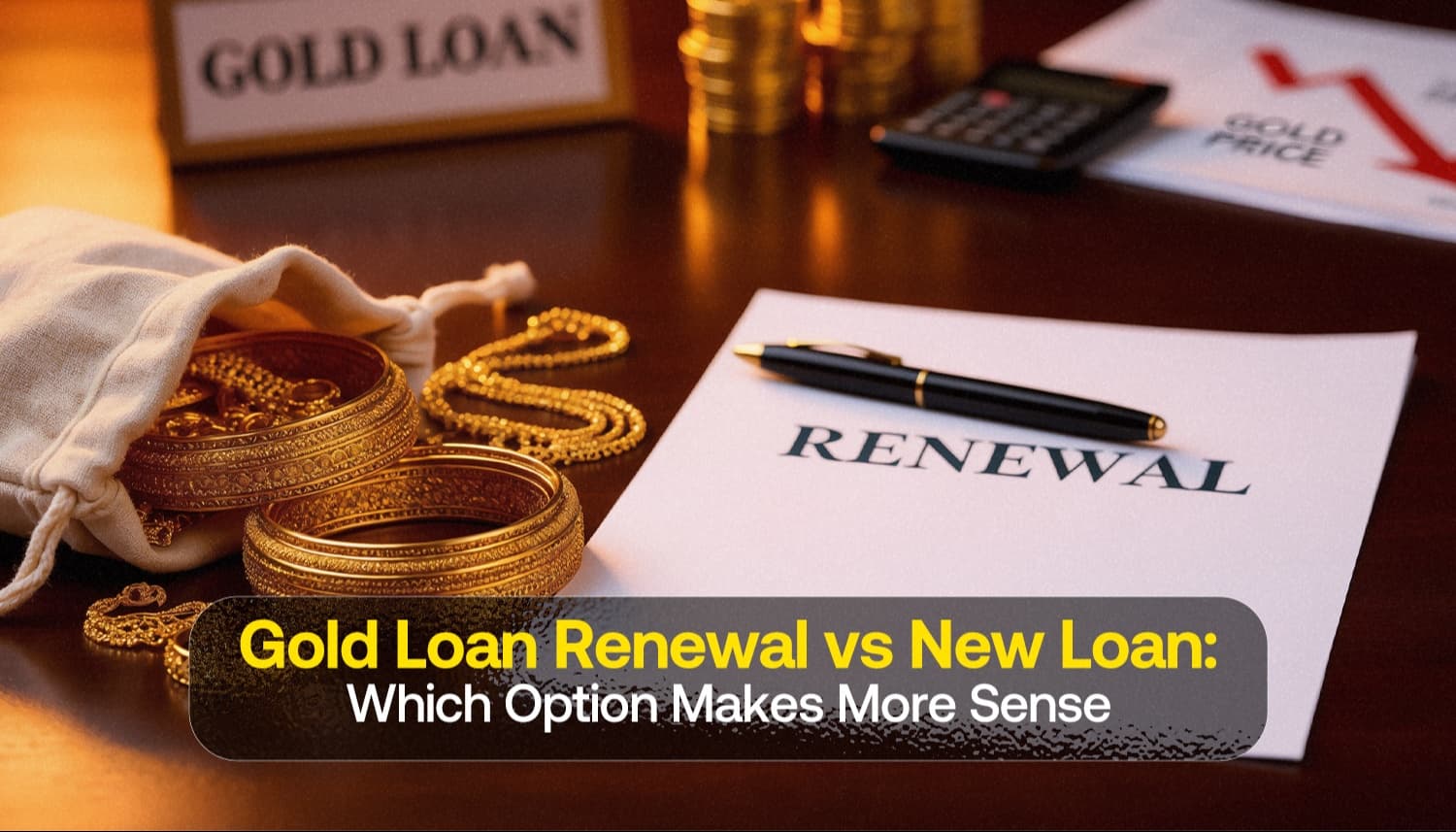
Liquidity against personal gold ornaments and assets still continues to be recognized as one of the smartest and safest ways to navigate immediate financial crunches. When faced with unexpected monetary urgency, millions of homes leverage their gold holdings without liquidating them, well aware of the fact that loans against gold assets provide quick disbursals and minimal administrative friction points. However, a critical financial tipping point is ultimately encountered when an existing repayment period reaches its completion and the principal borrowed amount cannot be settled as a one-time settlement.
At this juncture, critical decisions must be made with respect to whether a gold loan renewal is the right choice, or a fresh line of credit must be pursued instead. Prominent and well-known financial institutions and non-banking financial companies (NBFCs) such as Indel Money offer their customers with systematically structured, thoughtfully curated financial options for both options, making sure that customers get the privilege to access maximum financial flexibility according to their current monetary situation, financial requirements and their repayment capacities.
In this blog, Indel Money, the best gold loan company in India, explains the differences between an existing gold loan and new gold loan, and which option makes more sense, and the different factors to consider before zeroing in on a final decision.
Extending the repayment tenure of a gold loan involves updating the renewing the formal agreement with the lender after settling the accumulated interest up to that particular point. This operational framework allows customers to maintain their continuous association with the financial institution without undergoing the process of a comprehensive and exhaustive reassessment cycle from the ground up. The pledged gold ornaments and other gold assets will remain safely locked within institutional high-security vaults and uninterrupted continuity is maintained throughout the entire process. Gold loan renewals are frequently prioritized by customers when access to short term funds are temporarily stonewalled to unexpected turn of events, and due to streamlined procedures with reduced bureaucratic hindrances and regulatory red tape.
Moreover, since the administrative foundation has already been put in place during the process of the initial loan disbursal, customers do not have to spend an entire day inside a branch to get their loan approved and processed. Borrowers can effortlessly proceed along their financial trajectory without being subjected to the tedious and time consuming process of opening a brand new account, making it an efficient and optimal choice for continuous credit management.
On the other hand, commencing a new gold-backed financial arrangement involves formally pulling the plug on the pre-existing credit account, releasing the collateralized gold ornaments into the hands of the borrower for a temporary period of time, and then quickly re-encumbering the same gold assets to gain access to a fresh pool of funds. As a matter of fact, this option becomes exceptionally beneficial if the gold prices have significantly appreciated from the time of the initial borrowing date. Because in international and domestic markets gold prices undergo constant fluctuations, a higher current valuation standard will allow bigger disbursement against the same amount of gold.
Borrowers who are actively looking for strategies to maximize their working capital and elevate financial ambitions such as enterprise expansion, pursuing higher education or personal goals, commonly go for a fresh loan application. Furthermore, capitalizing on a new loan allows the borrower to bargain or procure special financing rates, revised and restructured loan-to-value (LTV) limits and renewed repayment structures that probably did not come into existence when the original disbursal was initiated and approved months, or maybe even years ago.